Is there an international standard governing scientific naming conventions?

There are lots of different systems of scientific names with different conventions or rules governing them: chemicals, genes, stars, archeological cultures, and so on. But the one I’m familiar with is the naming system for animals, which is fortunately also what the asker of this question is interested in.
The modern naming system for animals derives from the works of the 18th-century Swedish naturalist Carl von Linné (Latinized to Carolus Linnaeus). Linnaeus introduced the system of binominal nomenclature, where animals have names composed of two parts, like Homo sapiens. Linnaeus wrote in Latin and most his names were of Latin origin, although a few were derived from Greek, like Rhinoceros for rhinos, or from more exotic languages, like Sus babyrussa for the babirusa (from Malay).
Other people also started using Linnaeus’s system, and a system of rules was developed and eventually codified into what is now called the International Code of Zoological Nomenclature (ICZN). In this case, therefore, there is indeed an international standard governing naming conventions. However, it does not put very strict requirements on the derivation of names: they are merely required to be in the Latin alphabet (ICZN Code - Article 11).
As this question correctly points out, in practice a lot of well-known scientific names are derived from Greek. This is especially true for genus names: Tyrannosaurus, Macropus (kangaroos), Drosophila (fruit flies), Caenorhabditis (nematode worms), Peromyscus (deermice), and so on. Species names are more likely to be derived from Latin (e.g., T. rex, C. elegans, P. maniculatus, but Drosophila melanogaster is Greek again).
One interesting pattern I’ve noticed in mammals is that even when Linnaeus named the first genus in a group by a Latin name, usually most later names for related genera use Greek roots instead. For example, Linnaeus gave the name Mus to mice, and that is still the genus name for the house mouse, but most related genera use compounds of the Greek-derived root -mys (from μῦς), which also means “mouse”. Similarly, bats for Linnaeus were Vespertilio, but there are many more compounds of the Greek root -nycteris (νυκτερίς); pigs are Sus but compounds usually use Greek -choerus (χοῖρος) or -hys/-hyus (ὗς); weasels are Mustela but compounds usually use -gale or -galea (γαλέη); horses are Equus but compounds use -hippus (ἵππος).
Have you ever thought why the scientific names are mostly derived from ancient languages?
#Science #Society #animals #Quora








Datos interesantes
Découvrez les oiseaux les plus colorés
20/4/2020
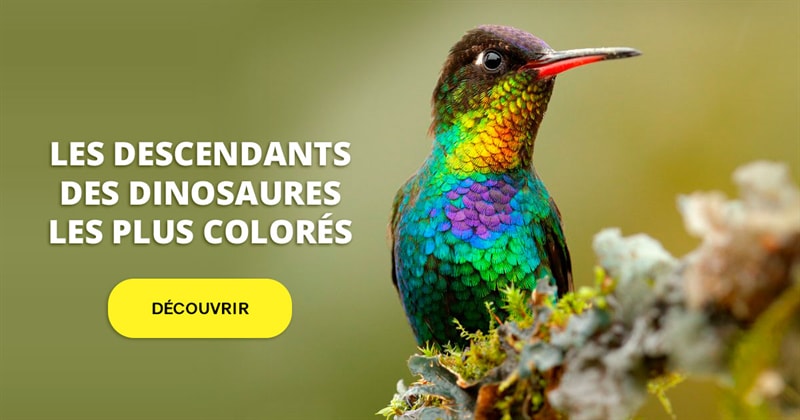
Ces descendants des dinosaures sont les plus colorés.
Cette carte illustre la superficie réelle du Japon
20/4/2020

Le Japon est un pays à la superficie modeste mais il est relativement étendu du nord au sud.
Les constellations du zodiaque sont-elles vraiment fixées ?
17/4/2020

Elles ne sont pas plus fixes que les autres.
Quel est le nom romain de Paris, quelle était sa taille par rapport à Paris aujourd'hui ?
20/4/2020

Paris était Lutèce une ville de province de taille modeste.
Pour le métabolisme d'une plante, y a-t-il une différence entre lumière artificielle et lumière solaire ?
17/4/2020

Il n'existe pas d'ondes "naturelles" ou "artificielles".